
What My Gut Panel Revealed About My Skin
If you read my last post on perioral dermatitis, you know I went through a frustrating few months trying to fix a skin problem with topicals, which kept making it worse. The turning point was stepping back and doing what I do with clients every day: looking at the gut.
Go read Part 1 first if you haven't — this post picks up where that one left off.
Why I suspected the gut in the first place
I've worked with clients on chronic skin conditions for years: eczema, psoriasis, rosacea. In my experience, we see the biggest progress when we address what's happening underneath, not just on the surface. So when my own skin started behaving like a chronic inflammatory condition rather than a simple irritation, the gut was was where we had to look.
What I also had to reckon with was my own health history. I was born by c-section, which matters more than most people realize. Babies born vaginally pick up a specific set of bacteria from mom as they pass through the birth canal. These bacteria seed the gut microbiome from day one. C-section babies miss that initial inoculation, and research shows they tend to have different microbiome patterns as a result, including lower levels of certain key species. Then, in my teens and early twenties, I took antibiotics several times for various reasons. Bifidobacteria are particularly vulnerable to antibiotics and they're often the first to be wiped out and one of the hardest to recover without deliberate intervention. So gut health is something I’ve already had to work harder on than most and, I had reason to suspect that my gut microbiome might be playing a role in this latest development.
What the Tiny Health panel showed
I chose to test with Tiny Health because of its shotgun sequencing technology, which maps the presence and relative abundance of around 120,000 different microbes. For comparison, most standard gut panels test for around 60ish microbes. That's not a small difference, it's like opening the door to see what’s inside the full room, or looking in with one eye through the key hole.
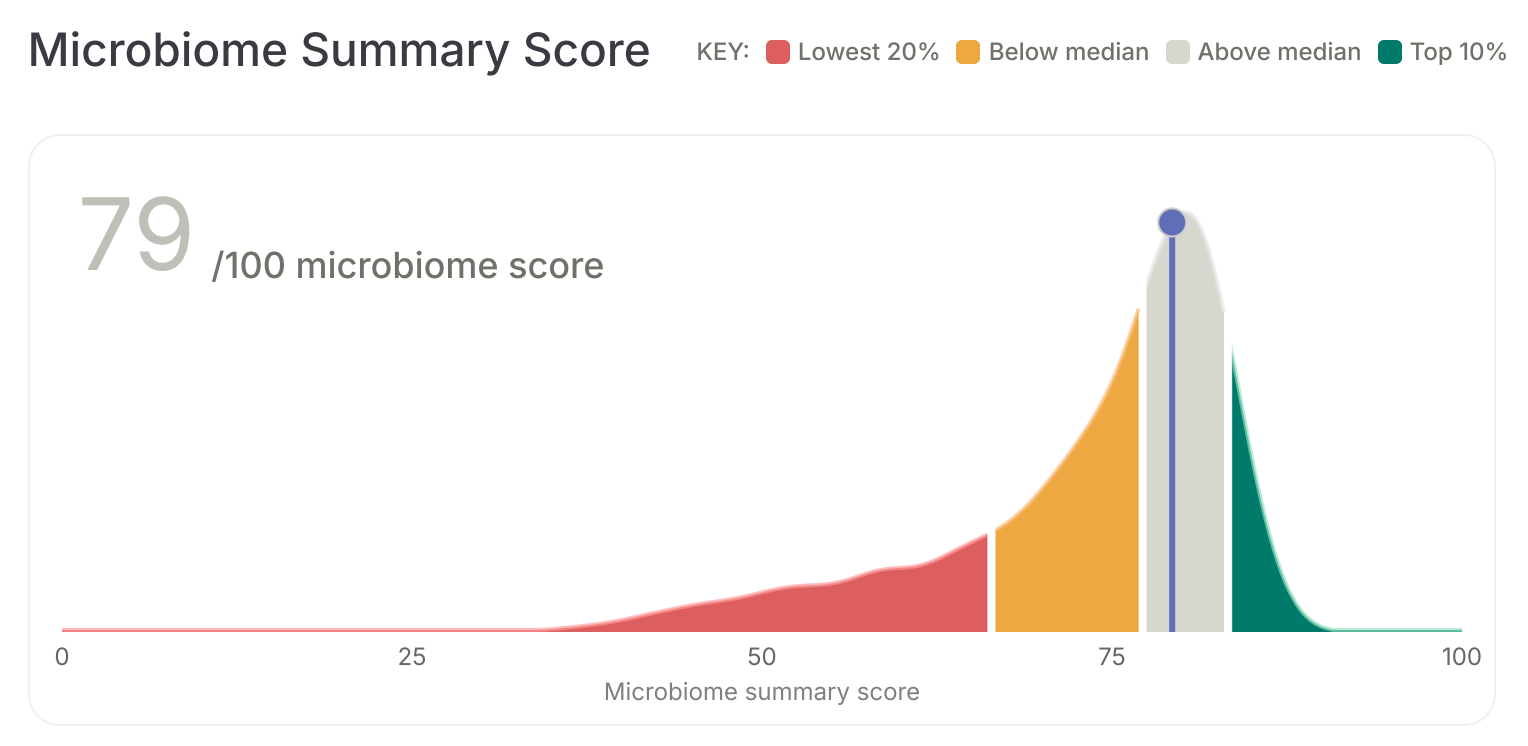
At first glance, my results looked pretty good. Years of eating mostly whole foods, a lot of plants, and some targeted gut protocols had done their job. My overall “microbiome score” was solid.
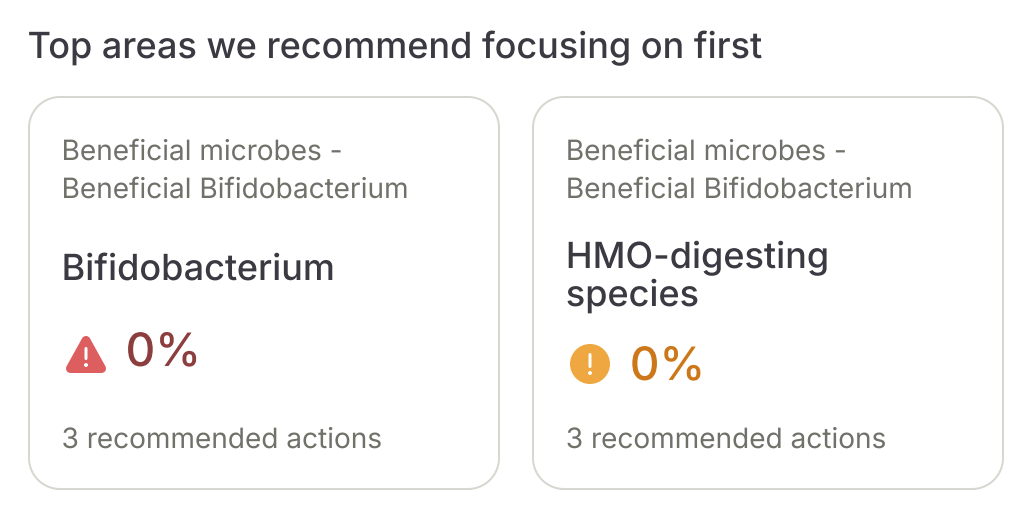
But when I looked deeper at what might be driving my skin issues, I found something striking: I had no detectable bifidobacteria, like at all.
Why that matters for skin
Bifidobacteria aren't just a general "good bacteria" — they play specific, well-documented roles in skin health, operating through what's called the gut-skin axis. This is the pathway through which the gut and skin communicate via the bloodstream and immune system, and it's a big part of why gut imbalances so reliably show up on the skin.
Two species in particular, Bifidobacterium longum and Bifidobacterium breve, are central to this. They produce short-chain fatty acids and other helpful compounds that travel to the skin and do several important things: reduce systemic inflammation, regulate immune responses that drive allergic reactions and rashes, and support the enzymes involved in healthy skin cell turnover. That last one is especially relevant: disrupted cell turnover is a core mechanism in conditions like psoriasis and perioral dermatitis alike.
In other words, bifidobacteria help maintain the skin barrier. And as I wrote in Part 1, a compromised skin barrier is exactly what sets the stage for perioral dermatitis.
Finding zero bifidobacteria suddenly explained a lot. It explained why my skin barrier was so vulnerable when I started using the retinol cream, and why a viral infection a few weeks later was enough to tip things over the edge. My gut wasn't giving my skin the backup it needed.
The second finding: no HMO-digesting species
The panel also showed I had no HMO-digesting bacteria. That’s a category of bacteria capable of breaking down Human Milk Oligosaccharides (HMOs).
You might be wondering what infant nutrition has to do with an adult's skin. These bacteria, particularly Bifidobacterium infantis, are considered keystone species in early gut development, but they don't stop being important after infancy. B. infantis reduces systemic inflammation, strengthens the skin barrier, and fights oxidative stress. For inflammatory skin conditions, that's essentially the full trifecta of what you'd want to address.
The fact that I had none of these species either was consistent with my history: c-section birth, multiple antibiotic courses; and it gave me something specific and actionable to work with.
What I'm doing about it
This is where having actual data changes everything. Instead of guessing at a probiotic protocol or throwing a handful of supplements at the problem, I had a clear target.
I started using targeted probiotics to reintroduce bifidobacteria specifically, rather than a generic multi-strain probiotic that may or may not contain what I actually needed. I added HMO prebiotics to selectively feed and help reestablish species like B. infantis. And I increased my intake of fermented foods. More sauerkraut and kimchi alongside the fermented dairy I was already eating regularly.
By this point, I’d also stopped the topicals that were stripping my skin barrier or trapping bacteria against the skin. That piece mattered too.
And this is genuinely the best my skin has looked since February.
What this means if you're dealing with something similar
Perioral dermatitis gets a lot of attention, but the same gut-skin axis mechanisms I found in my own panel are relevant across a whole range of chronic skin conditions — eczema, rosacea, psoriasis, and others. The common thread is usually some combination of gut dysbiosis, compromised barrier function, and an immune system that's stuck in a low-grade inflammatory response.
The frustrating thing about all of these conditions is that they're often treated exclusively at the surface. And for a lot of people, that means years of trying different creams, cutting out foods one at a time, or following generic advice that doesn't account for what's actually happening in their individual gut.
If that sounds familiar, if you've been dealing with a chronic skin issue and feel like you've been treating symptoms rather than causes, that's exactly the kind of thing I work through with clients. We run the right testing, interpret what it actually means for your specific history and presentation, and build a protocol around that.
If you'd like to explore working together, you can submit an application here and I'll be in touch.